Tuesday, October 21, 2008

Obama Abroad

Two Saturdays ago Robbyn and I were waiting to order our Fairtrade coffee at the Borough Market and saw a street canvasser holding a sign that said “Searching for Americans.” Damn, are we that predictable? The canvasser was from Democrats Abroad, and they were… get this… doing get-out-the-vote work here in London.

Well, why not? There are a quarter of a million Americans living in the UK – no small number – and surely a fair few of them are from swing states. It is significant enough that the DNC actually has a full-time staffer working here.

As it turns out, these people found me at precisely the right moment in the campaign. You see, although I am a 30-something, liberal, East Coast, passport-owning American, I am not ENTIRELY predictable. Specifically, I am not a Democrat.

If you are reading this blog then you are probably one of my close friends or family members and therefore you probably already know that for the past few presidential elections I have voted Green. You may have even briefly stopped talking to me because of it.

But the Obama UK folks found me about 12 hours after I finally got fed up enough with the Republican campaign tactics (Karl Rove, is there any chance you are reading this…) that I was inspired to CHANGE MY VOTE to Obama.

As a Massachusetts voter (in absentia), my Democratic vote is either entirely meaningless or entirely symbolic depending on where you fall on the cynicism/idealism spectrum because the Dems could nominate an actual donkey and still carry my home state. This is why I have always felt free to vote my conscience (which remains Green) in the past.

My reasons for choosing Obama this time around may be different than some other former Green voters who will also be falling back into line this year. Yes, the world is more screwed up than anyone could have ever predicted Bush would make it, and this certainly makes some people more willing to buy into the lesser-of-two-evils approach to voting. And yes, though Obama is basically another centrist Democrat he is somehow qualitatively more palatable to many people on the Left than Gore or Kerry ever were. These factors are not insignificant to me, but they are not what changed my thinking.

What changed my thinking is fear. Or more specifically, the politics and the language of fear. By now we are all so familiar with the eye-rollingly transparent Republican talking points that attempt to depict Obama as “The Other.” A terrorist sympathizer. A foreigner. A Communist. A person who just doesn't feel the same way about America that YOU AND I do.

The worst thing is that some people seem to be buying into it; we keep hearing about ugly scenes at campaign events, hearing it on the radio, and reading it on the internet. It’s getting nasty. But is it really so hard to understand those who lash out? Of course they are responding to the language of fear – they are afraid! Afraid for their jobs, and their houses, and their security – all of the things that have (ironically) been put in jeopardy by the policies of the past eight years. And now they have been given a platform and practically invited to act on those fears. These actions may be desperate and irrational, but they are there and they need to be stopped.

In my day job I try to teach young people to recognize the roots of intolerance and challenge them on a personal level. History teaches us that prejudice does not just magically appear in societies. It is planted and cultivated and nurtured. And it is accepted because it is subtle and people don't even realize they are accepting it.

I feel like this election has been turned into a referendum on fear and xenophobia. Are you willing to tolerate a campaign of whispers and suggestion against a man simply because he is outwardly different looking, or are you not? Rarely does the act of challenging prejudice come in such a tidy package. Normally it's an awkward conversation stopper. Normally you risk getting your ass kicked. In this instance, it is as simple as punching a chad. Thank you, Republicans, for making it so easy on me.

So, yes, I’ll say it: I suppose I am voting for Obama because he is black. Not in the affirmative-action sense, or in the “wouldn't it be nice to elect an ethnic president” sense (although it would be), but in the sense that I have become a single issue voter. I hate racism, and voting for Obama is precisely the thing that racists hope that I will not do.

And even though I would like to see the Green Party reach the 5% threshold needed to qualify for Federal matching funds, (which I have a much more direct impact on than I do on Obama’s election) this ultimately is not as important to me as sending a message to all of the people screaming racist insults at campaign events and posting them online. I want Obama not just to win, I want him to win big, so that no one can question his legitimacy and so that it is as clear as utterly possible to the racists that their views are on the fringe. That they lost, and that their ideas about what is “American” and what is not are not ones that are actually shared by… Americans.

Put simply, I am voting Obama to say, “f—k you” to racism.

When Obama wins, he is going to have a lot to answer for. Some of his policies suck, and I look forward to joining in criticizing him when it is needed. He seems like he’ll be more receptive to it than Bush was anyway.

Symbolism and sympathies aside, his election will have a positive impact on my quality of life as well. I’m not talking about taxes or the economy here. I am talking about being able to live and travel as an American abroad, and not be embarrassed about it. I don’t want to have to explain any more that I am American, but not THAT KIND of American, every time some one says to me in broken English “America… George Bush… very bad.” I actually think people might even begin, after a period of some serious image repair, to start thinking favorably about our country again.

I read in Time magazine that here in the UK, only 53% of people polled say they like America, compared to 83% in 2000. This brings me back to campaigning for Obama. We’ve been hitting the American hotspots ourselves lately with our Obama gear and absentee voting information. The Americans we’ve met have generally been tickled to see us out there. But more noteworthy has been the reactions of British people once they get over their initial confusion. It is so un-British! They smile. They give the thumbs up. They… don’t… pretend not to notice you. They SPEAK! “I hope your man wins,” they say.

Man, so do I.

Wednesday, March 26, 2008

Prepare to be Moldova

I don't imagine there was dancing on the streets of Chisinau the day that the Lonely Planet added the words “AND MOLDOVA” to the title of its Romania guidebook. But there should have been. Short of becoming a new EasyJet destination, nothing serves to officially sanction a region as the new place to visit quite like a tip-off in the backpacker bible. Surely this is more important to the Moldovan economy than ascension to the EU.

Like most people who have done a bit of traveling to the typical city-break destinations, I am constantly on a quest to find that ever elusive city “that hasn't been ruined yet.” A few years back, the clichĂ© was to describe a place as the New Prague. Today, you can forget Prague. You can forget all of the New Pragues for that matter. Tallinn, Riga, Krakow, Split, Budapest, Ljubljana - you name the contenders - they have all been claimed by the British stag party set. In the search for authenticity, you need to go further afield.

One simple line in the Lonely Planet, then, was all it took to convince me that I absolutely needed to travel to Moldova. “Visit Moldova now,” it read, “before it is too late.”

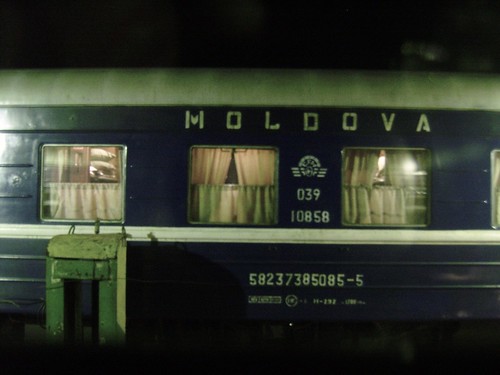
That settled it! One flight to Bucharest and an overnight train journey in a Communist-era sleeper car later, and there we were. Chisinau. The new frontier. A city that a few weeks ago, I had literally never heard of.

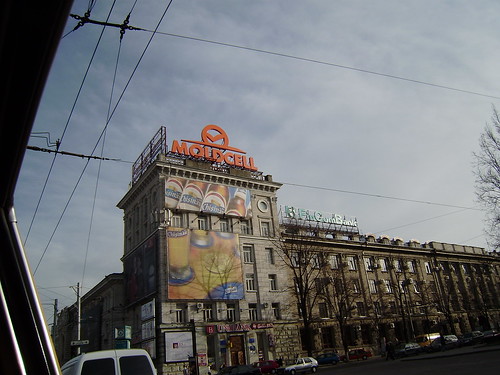
There is something charmingly unrefined about Moldova as a tourist destination. I don't say this patronizingly (for Moldova is Europe’s poorest country) or retro-ironically (even though, in an age of Cold War nostalgia, the breakaway Moldovan republic of Transdniestr is still bona fide Communist). I mean that, for example, there is no tourist information office anywhere in the country. There are not even travel agencies that deal with Moldova, except for the ones helping you to LEAVE the country. This lack of refinement has two sides. On the one hand, there is great satisfaction in not hearing English spoken in every shop and cafĂ©; on the other hand you also have to gesticulate wildly to communicate and endure being stared at like a Martian when you enter most rooms. On the one hand, meals and lodging cost pennies; on the other hand, the food and rooms are straight out of the USSR circa 1980. (We stayed in flat charitably advertised as a “hostel” that in the US or UK would be too dodgy looking for many crack dealers.)

In a place like this, there is a definite “what the hell are you doing here?” vibe you get from many people. Not in an unwelcoming way – just in a genuinely baffled sort of way. Most of the foreigners there are Mormon missionaries, Peace Corps volunteers, and the like. It is crazy to think that the search for authenticity takes us to this level – that in order to have a non-touristy experience, even for a weekend, you need to go someplace that is still receiving substantial foreign aid. But I suppose that I am basically after the same thing that the Church of Latter Day Saints or the US State Department are after: the opportunity to lay claim to a place “before it is too late.”

Was Moldova an enjoyable place to spend a long weekend? Well, it wasn't exactly Venice, but that's not the point. As Robbyn points out, some places you go because they are famously beautiful or important. Some places you go just to see the world from a strange and different perspective.

These days it is not merely enough to experience the world. You need to experience the world first, before anyone else. One day I'll be talking about visiting Moldova in '08 the same way that I like to casually mention seeing REM at the Wang Center in '86.

I give it 10 months before EasyJet starts flying to Chisinau. You'll be able to find me grumbling about Moldova back when it was still worth visiting.

Monday, January 07, 2008

Imprecision '08: The Road to the Correction


The American Presidential race sure is heating up... In Britain.

Between last week's Iowa Caucus and this week's New Hampshire primary, the election has been the top story on the news every morning. So prominent is the coverage that on Saturday, a British guest who was at our place for brunch was able to engage in a thoughtful conversation about Barack Obama's prospects and what a cultural shift this would represent for America. This particular brunch guest is 11 years old.

To any Americans reading this, it goes without saying that our electoral system is arcane and utterly confusing. But what must foreigners think? In this post-2000 age, when even the WINNER of the election doesn't actually win, then you can pretty much forget trying to explain the Iowa Caucus.

Understandably, the British press doesn't have the time to get into this level of detail, so what we end up with is just the most basic-level horse race style coverage. And it is completely misinformed. Over the past week, I have had to patiently explain to people that no, in fact, Obama didn’t really “win a big election in Iowa” and that the race for the White House is not actually “down to a woman versus a black man.”

But you can’t blame people for being interested. In these globalized times, the American presidential election arguably has as much impact on British people’s lives as their own political races do. It must be incredibly frustrating to them that they have to sit back and watch while other people are put in charge of making the decisions that affect the collective fate of Britons. (A frustration that long-time blog readers may remember being exemplified by this headline.)

So I will continue to politely explain whatever I can about the process when people ask -- because the concept of “civic duty” strangely takes on added weight when you have the eyes of disenfranchised foreigners watching.

But man, it’s going to be a long 11 months.

Thursday, August 16, 2007

Museum is Maws Muse...More!

As promised/threatened: there is a sequel to my earlier post about analyzing Auschwitz. I've been thinking more about how museums construct our history. So, this meta-narrative thing was very much on my mind when we spent a few hours at the British Empire and Commonwealth Museum in Bristol. To recap, what we're talking about here is not exactly what the museum actually teaches visitors, but rather how and why it teaches what it does. The story behind the story, if you will. I visit a lot of museums, and I deal heavily in the history and education business on a daily basis, so hopefully you can at least understand why I am being such a nerd about this...

At issue this time was another “challenging” part of history – the British Empire and slavery (the museum currently has a temporary display called “Breaking the Chains” to mark the bicentennial of the abolition of the slave trade).

The first thing to take note of is where the museum is located. Now Bristol may not exactly be Poland, and this museum site doesn't carry the significance of a former death camp, but as a city that was essentially built on profits from the slave trade -- perhaps the ugliest component of the story of the Empire -- it is as compelling a place as any to examine this part of history. This is an important starting point in a consideration of this museum's meta-narrative. The choice of location is neither obvious nor arbitrary for any museum or memorial site.

The question that I often pose to the students I lead around Poland applies here just as well: where does this story begin? Take the 'story' of slavery, for instance. It's hard to say, really. You might reasonably frame the story in the context of the slaves themselves, or possibly the plantation owners, or the policy makers who enabled slavery to exist. Or, as is the case with Bristol, we could frame the story in the context of slavery's profiteers, and use one of their major home bases as the backdrop to set it against.

So well done, you Bristolians, for being willing to embrace, or maybe I should say confront, the dark side of your history. It would have been much easier to point the finger elsewhere in telling the story of slavery (it also might not have brought in as much tourism, but I am trying to not be cynical here).

I was impressed with the museum for other reasons as well. The language in this one display (pictured) was fairly typical. It begins, “How much good the British Empire did depends on your point of view…” and goes on to say things like “there were many ethical problems with introducing western medicine and schooling to non-European people.”

I think this strikes just the right tone. Keep in mind that while any debate about the merits of slavery is pretty much over, this is not the case when it comes to the more general issue of the British Empire. This is still a complicated issue today, one that is fracturing contemporary British identity. Gordon Brown advocates that Britons should be proud of the positive legacy of the empire, which probably doesn't sit well with those who view the colonial relationship as one of exploitation and paternalism. I am no fan of the inherent racism of colonial ideals, but I sure do love living in a multicultural London. I should also point out that I visited Bristol with my friend Prash who was born in India. Presumably I have the Raj to thank for our friendship, in some weird indirect way.

So anyway, like I said, complicated issue... Well done.

In the special slavery exhibit, I was similarly impressed. First, by this quote that greets visitors upon entry. It reads, “They will remember that we were sold, but not that we were strong. They will remember that we were bought, but not that we were brave.” Again, nice. From the very outset of the exhibit, its curators are announcing that this story is not going to go along with the traditional narrative. That would be the one in which slaves are portrayed almost solely as helpless victims, whose liberation was only possible thanks to the altruistic actions of benevolent white people. What about slave rebellions and smaller daily acts of resistance? What about the freed slaves who relentlessly spoke out to win white converts to the abolitionist cause?

This more inclusive way of framing the story made it an effective exhibit, I thought. There were other things I liked as well, like the way that they continued the “story” beyond the conventional “ending” -- the one that tells us that the slaves were freed, then lived happily ever after. The exhibit rightly highlighted that the end of the slave trade was not actually the end of slavery, and that the end of slavery was not actually the end of oppression, discrimination and disadvantage. They made connections to musicians like Bob Marley, and to contemporary campaigns against forced labor and other modern forms of slavery. This active attempt to “connect” with a contemporary audience was important for me to see, because it is exactly what Auschwitz does not do (which is sort of OK, because it enables me to have a job making those connections). And it demonstrated that museums can be both objective and activist at the same time. They can teach about controversial parts of history in ways that are educationally sound and don’t clobber you over the head with their bias, but that still inspire you to “do something” in your own life with the lessons you might have learned (hopefully) from history.

In short: Good museum. You should go.

The Balloons were nice too.